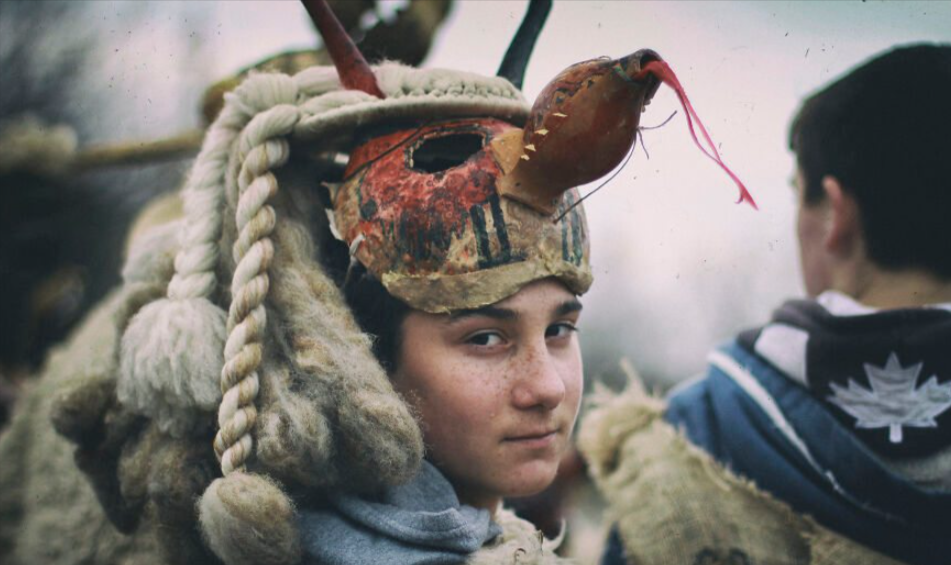
The origins of Bele Poklade trace back to pagan rituals celebrating the Sun and the arrival of spring. Over time, the Christian Church adapted these customs, embedding them into the liturgical calendar. The name “Bela” (White) symbolizes purity and the transition to a diet consisting mainly of dairy products and eggs, as meat consumption is already restricted during this week in preparation for Lent.
A Week of Festivities and Masquerades:
Throughout the week leading up to Bele Poklade, communities across Serbia engage in festive feasting, social gatherings, and lively masquerade processions. The culmination occurs on the last day when masked participants, known as “mačkari” or “građani,” take to the streets dressed in elaborate costumes.
Young men and children don traditional disguises made from sheepskin, straw, feathers, and carved pumpkin masks, resembling supernatural beings, animals, or even well-known figures. Accompanied by the rhythmic clanging of bells, the pounding of wooden sticks against fences and thresholds, and deep, guttural chants, these masked performers move from house to house, reenacting an ancient rite of banishing evil spirits and welcoming the renewal of life.
The Ritual Bonfire – Cleansing by Fire:
As night falls, villagers gather at a central square where a large bonfire, known as “jarga”, “opalija,” or “karaveštica” is lit. This fiery spectacle symbolizes the destruction of malevolent forces and the renewal of purity within the community.
Preuzimanje ovog teksta podrazumjeva da se navede izvor kao i da postavite url vezu prema ovom članku.
